Why Kiko Goats?
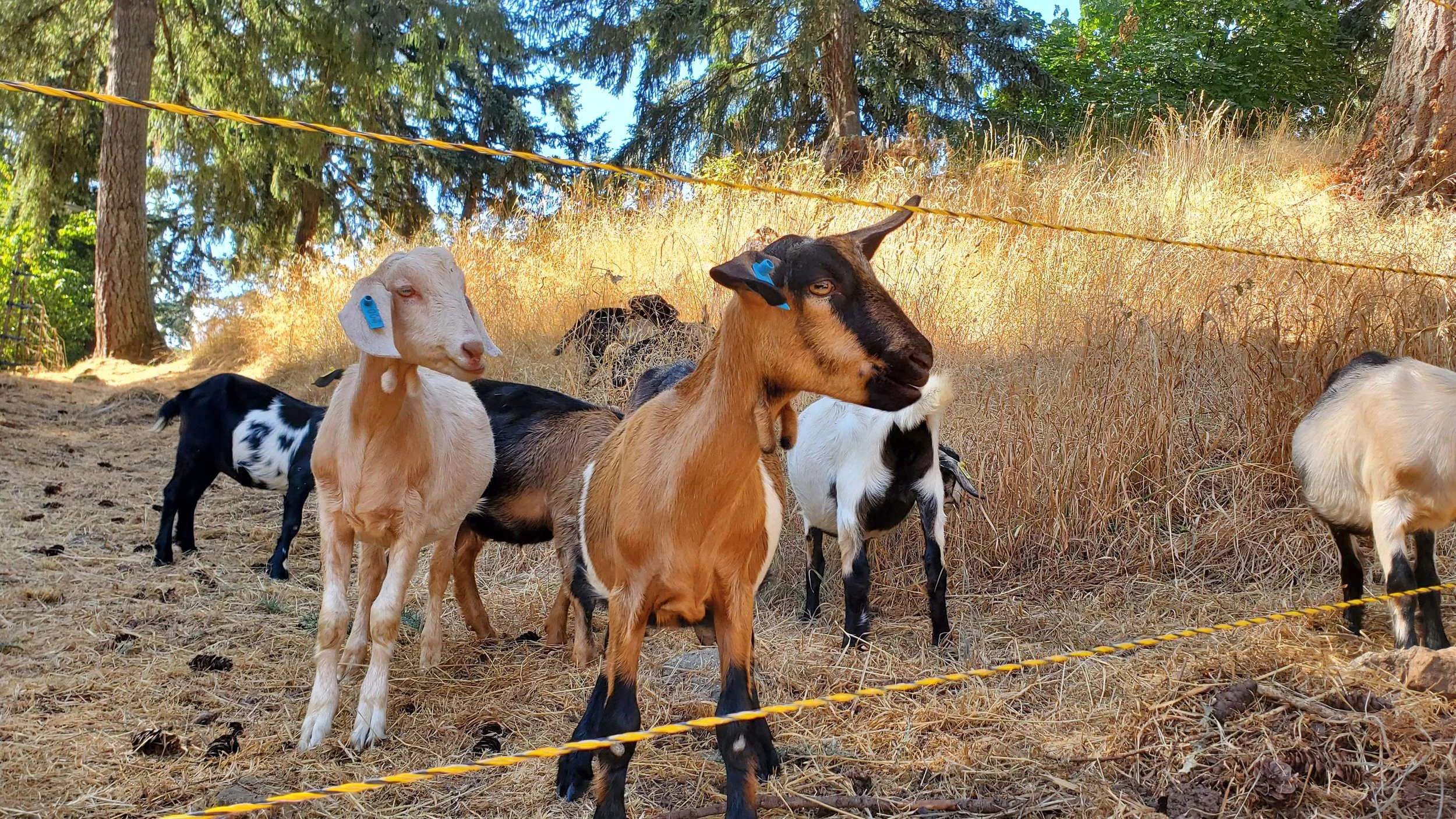
When I tell people I run a grazing business, the first question is usually, "Why goats?" The second is almost always, "What kind?"
If you’re just looking for a lawn ornament, any goat will do. But when you’re asking animals to clear thick Oregon blackberries, navigate steep terrain, and work through a Springfield winter, you need a professional-grade animal. For us at Hamlin Family Farm, that means the Kiko.
Built for the Job, Not the Show
Kikos were developed in New Zealand for one reason: meat production under rugged conditions with "low-input" management. In plain English, that means they were bred to take care of themselves.
In the grazing world, "hardiness" isn't just a buzzword, it’s the difference between a successful project and a disaster. Here’s why we’re betting the farm on this breed as we scale to 50 head this year:
Parasite Resistance: This is the big one. Most goat breeds struggle with the damp climate here in the Pacific Northwest. Kikos are famous for their natural resistance to internal parasites, which means they stay healthy and energetic without us having to constantly intervene with chemicals.
Superior Hooves: Oregon mud is no joke. Kikos have incredibly tough feet that are less prone to rot and problems than your average dairy goat. If they’re going to be working out at the EWEB plant or on a timber lot, they need a solid foundation.
Vigor and Drive: Some goats are lazy; Kikos are foragers. They have a natural "hustle." When we put them in a thicket of brush, they don't just nibble, they get to work. They’re aggressive eaters, which is exactly what you want when you're trying to reclaim a pasture.
Scaling with Quality
As we grow the herd this year, I’m being selective. Growing from 18 to 50 isn't just about "more goats", it’s about more of the right goats. By sticking with the Kiko breed, we’re ensuring that our crew is reliable, resilient, and ready for whatever the Willamette Valley throws at them.
At the end of the day, our goats are our employees. And in my opinion, the Kiko is the hardest worker in the business.
— Tyler Hamlin, Owner & Grazing Specialist
